Commercial instrument hub
Air monitoring instruments — selecting the right tool for the job
Handheld, portable, fixed, indicative, research-grade — the instrument category is wide. Choosing well begins with the question being asked, not the spec sheet.
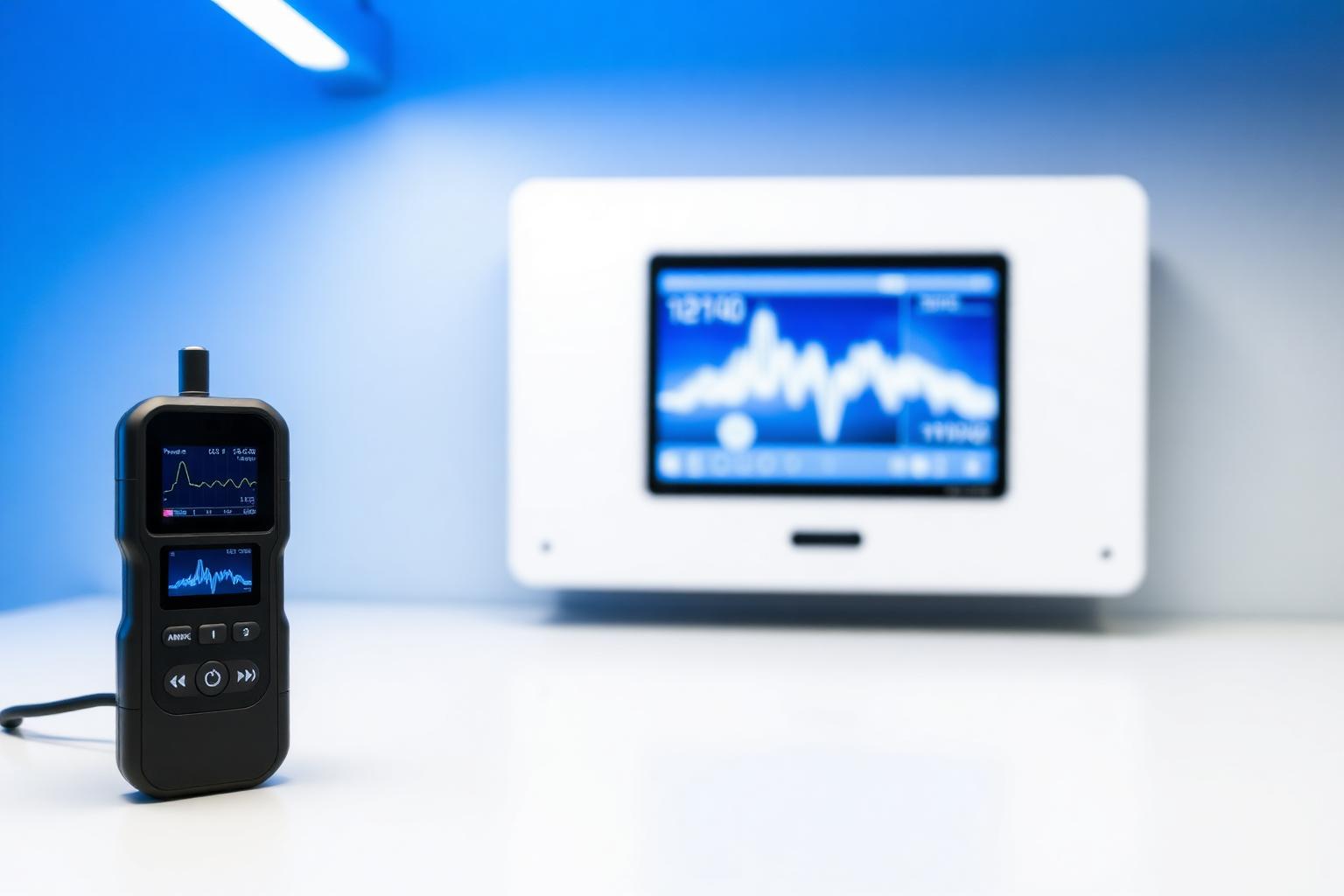
Form factors
The instrument landscape
Handheld direct-reading
Walk-through screening, complaint response and spot diagnostics.
Portable logging systems
Short campaigns, multi-zone surveys, temporary investigations.
Fixed networks
Continuous monitoring with dashboards, alerts and BMS integration.
Research-grade analysers
Reference-equivalent instruments for accredited measurement.
By measurement type
Instruments grouped by what they measure
Particle counters
Optical and condensation counters for size-resolved particle measurement. Cleanrooms, IAQ investigations, HVAC commissioning.
PID instruments
Photoionisation VOC monitors for field screening and source investigation.
CO₂ monitors
NDIR devices from single-room handhelds to networked sensors and BMS-integrated arrays.
Particulate mass monitors
Optical and beta-attenuation instruments for PM2.5 and PM10 mass measurement.
Environmental sensor systems
Multi-parameter sensor nodes combining CO₂, PM, TVOC, RH, T and gases on a single platform.
Gas-specific analysers
Electrochemical and chemiluminescence instruments for NO₂, ozone, SO₂ and CO.
Selection
Choosing an instrument — questions that matter
The defensible selection process starts with the question. What decision will the data inform? What accuracy is required for that decision? Over what time period and at how many locations? Who will operate the equipment, and on what calibration cycle?
Those answers usually narrow the field quickly. A complaint investigation across one office floor needs a different instrument suite from a multi-site continuous IAQ programme or a cleanroom classification protocol. The instrument follows the brief.
Data logging, connectivity, calibration logistics and ongoing technical support typically matter more than headline accuracy. The cheapest instrument that produces defensible data for the question is the right one.
Comparison
Instrument categories and roles
| Category | Typical use | What it is not |
|---|---|---|
| Handheld direct-reading | Walk-through, screening, complaint response | Not a continuous monitoring solution |
| Portable logging | Short campaigns, multi-zone studies | Not a long-term fixed install |
| Networked sensor system | Continuous IAQ with dashboards | Not reference-grade for regulatory work |
| Research-grade analyser | Accredited measurement, reference data | Not a low-cost option for every site |
Operations
Calibration, support and ongoing operation
Calibration
Every instrument has a calibration cycle — manufacturer, accredited laboratory or in-field co-location.
Connectivity
Data export, API access and BMS integration where the project requires it.
Support
Field service, training, replacement parts and lifecycle planning shape ongoing value.
Deployment
Specification, installation, validation and reporting carried out for the specific project.
FAQ
Air monitoring instrument questions
Discuss an Air Quality Monitoring Project
Independent instrument selection, deployment and calibration support for UK air quality monitoring projects.
Discuss instrument selection