System architecture
Environmental monitoring systems — sensors, gateways, dashboards
An environmental monitoring system is more than a sensor. It is an architecture — hardware, connectivity, storage, analytics and operations — engineered to produce dependable data that survives a building's full lifecycle.
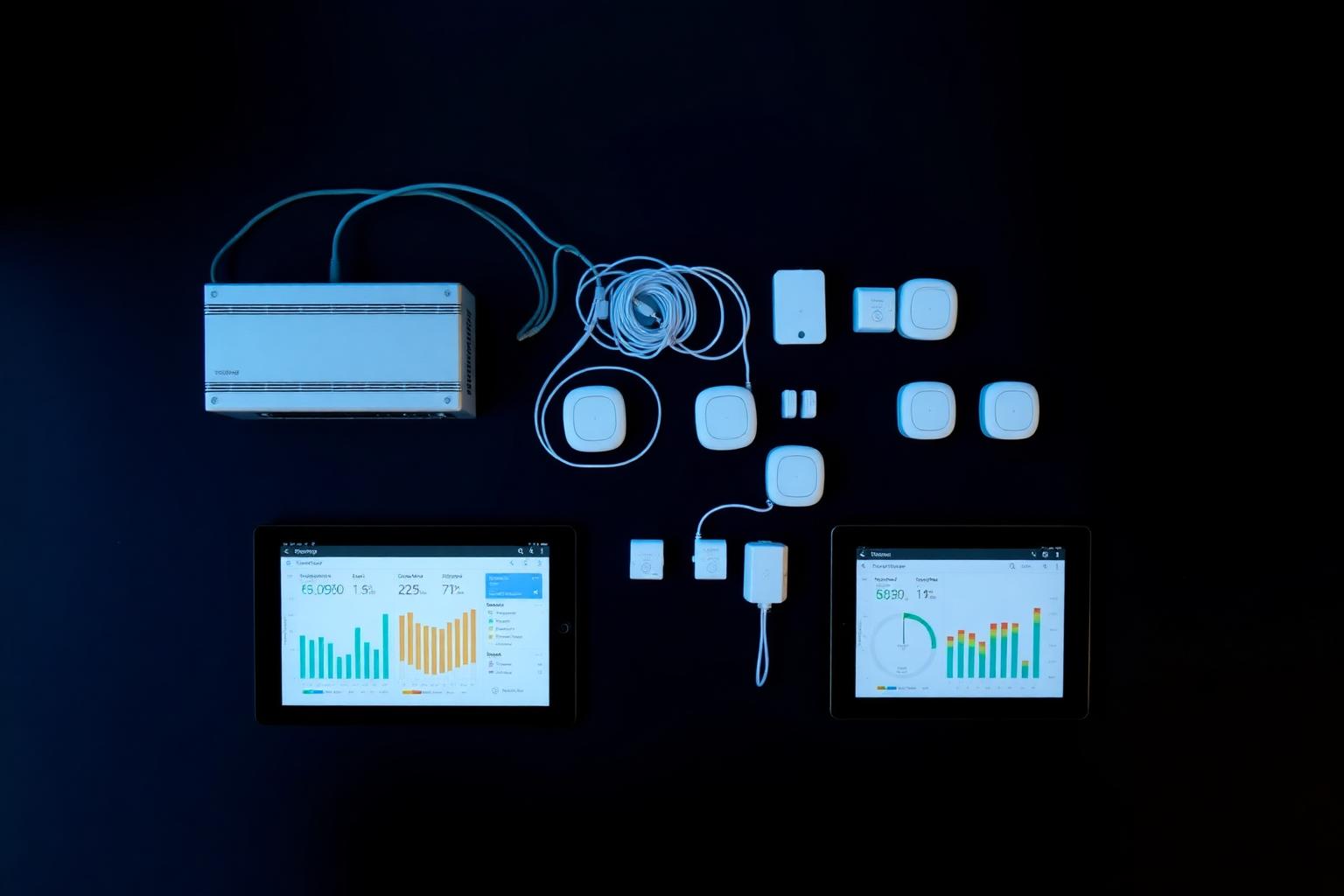
Architecture
The five layers of a working system
Each layer is replaceable independently — provided the architecture was designed that way at the start.
01
Sensors
Calibrated, traceable, with documented accuracy across the operating envelope.
02
Gateways
Local edge devices aggregating sensor data, buffering during connectivity loss and forwarding to the platform.
03
Connectivity
LoRaWAN, Wi-Fi, cellular or wired — selected per site for reliability and operational risk.
04
Data & analytics
Time-series storage, dashboards, reporting and API access for downstream systems.
05
Operations
Calibration cycle, firmware management, alert tuning and ongoing review.
Design
Designing for a 10-year deployment
Open data formats. Vendor lock-in is the largest hidden cost of monitoring. Insist on open APIs, exportable raw data and documented payload formats from day one.
Modular hardware. Sensor lifetimes vary by technology. A modular monitor that lets electrochemical or PM modules be replaced individually is more economic than wholesale device replacement.
Operational readiness. Calibration schedules, firmware update windows, alert ownership and escalation paths are part of the system design, not an afterthought.
Deployment
From single building to multi-site portfolio
- 1
Phase 01
Requirements & specification
Define what must be measured, where, at what accuracy and for whom — the system follows the question.
- 2
Phase 02
Single-site pilot
Deploy in one building, validate sensor placement, calibrate against reference and configure dashboards.
- 3
Phase 03
Portfolio rollout
Standardised installation across sites with shared platform, consistent thresholds and central reporting.
- 4
Phase 04
Operate and improve
Calibration cycle, alert review, ventilation and filtration optimisation informed by trend data.
Operations
What the system needs from the operator
Owner of the data
A named person who reviews trends, signs off thresholds and acts on alerts.
Calibration discipline
Annual reference comparison and documented adjustments — the discipline that keeps data trustworthy.
Change management
Re-configuration when zones, occupancy patterns or use change, so dashboards stay meaningful.
FAQ
Environmental monitoring system questions
Discuss an Air Quality Monitoring Project
System design, deployment and operation for UK single-building and multi-site environmental monitoring.
Speak to a consultantFurther reading
System building blocks
Data layer
By pollutant