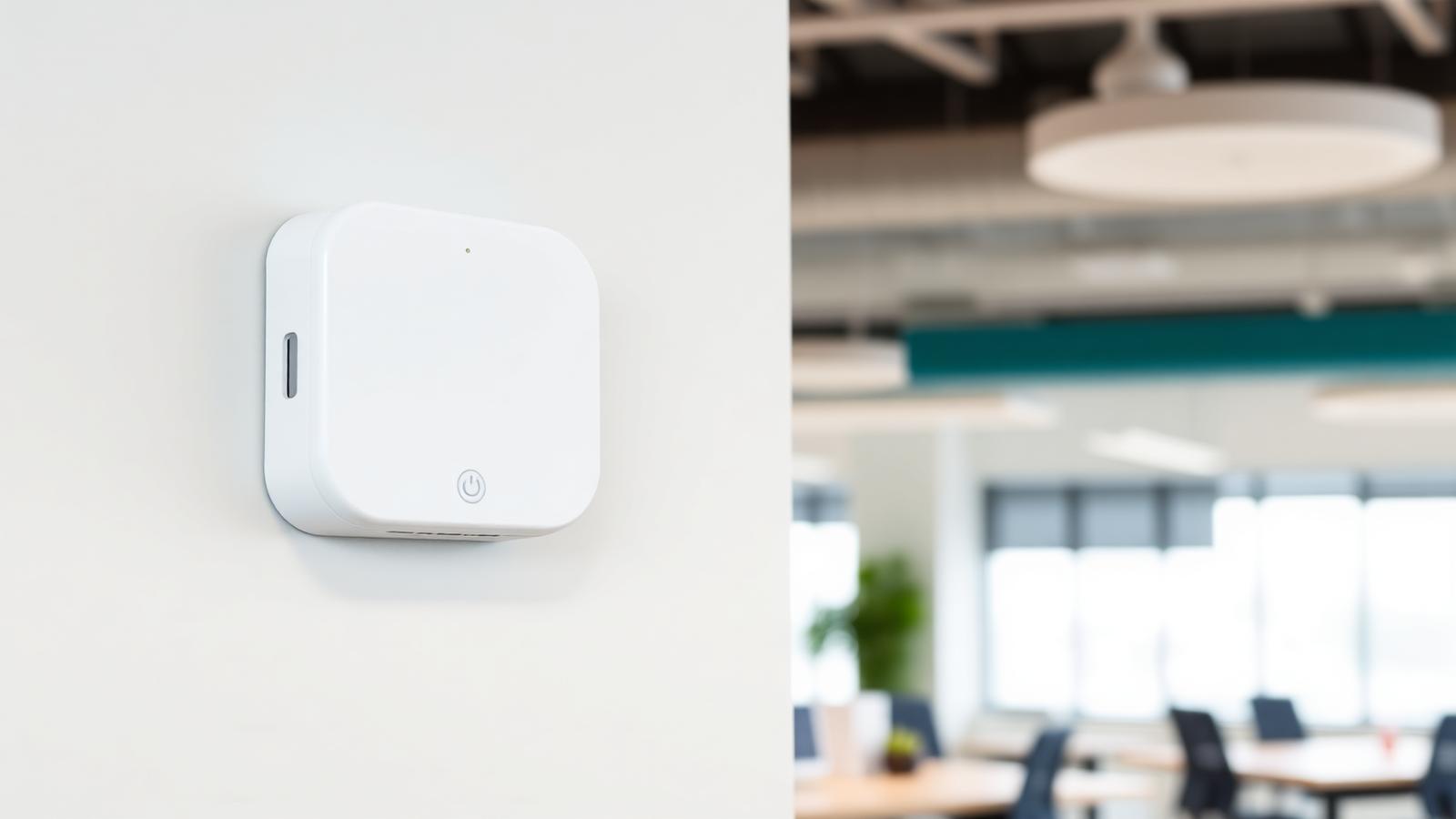
A working IoT air quality system has four layers. Sensor nodes at the edge measure pollutants, package readings and uplink them on a schedule. Gateways aggregate data from many nodes and forward it across a wide-area network. Cloud platforms ingest, store and visualise the data, and run alerting and integration logic. Application interfaces — dashboards, APIs, BMS connectors, mobile apps — turn that data into operational action.
Every layer is a potential point of failure and a potential vendor lock-in. The architecture decisions you make at procurement constrain what you can do later. See IoT air quality monitoring for the service view of this stack.